Every parent wants their child to feel confident when learning mathematics. But sometimes, children find calculations difficult, take longer to solve simple sums, or lose interest when numbers become challenging. Finding the right learning environment can make a difference. If you are exploring GAMA Abacus Nilambur, this guide will help you understand what abacus learning […]

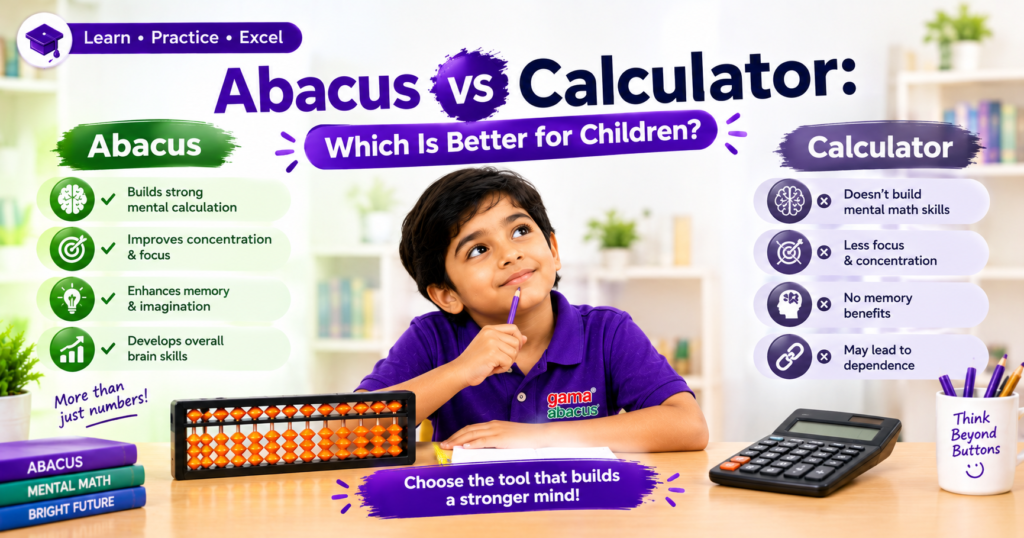
Abacus vs Calculator: Which Is Better for Children?
Abacus vs Calculator: Which Is Better for Children is a common question among parents who want to help their children develop strong mathematical skills. Both tools make calculations easier, but they serve different purposes in a child’s educational journey. A calculator provides quick answers, while an abacus allows children to explore numbers through physical movement, […]
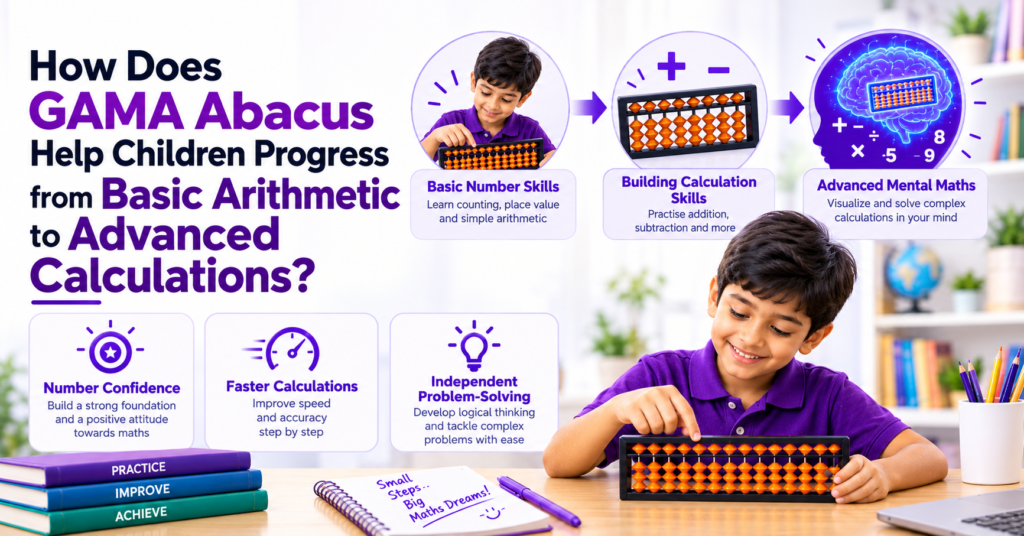
How Does GAMA Abacus Help Children Progress from Basic Arithmetic to Advanced Calculations?
Every child starts learning mathematics somewhere. For some, adding small numbers is easy, while others need more time to understand how numbers work. As children move to larger numbers and more complicated sums, they may begin to wonder whether maths is becoming too difficult. This is where a structured learning approach can make a difference. […]
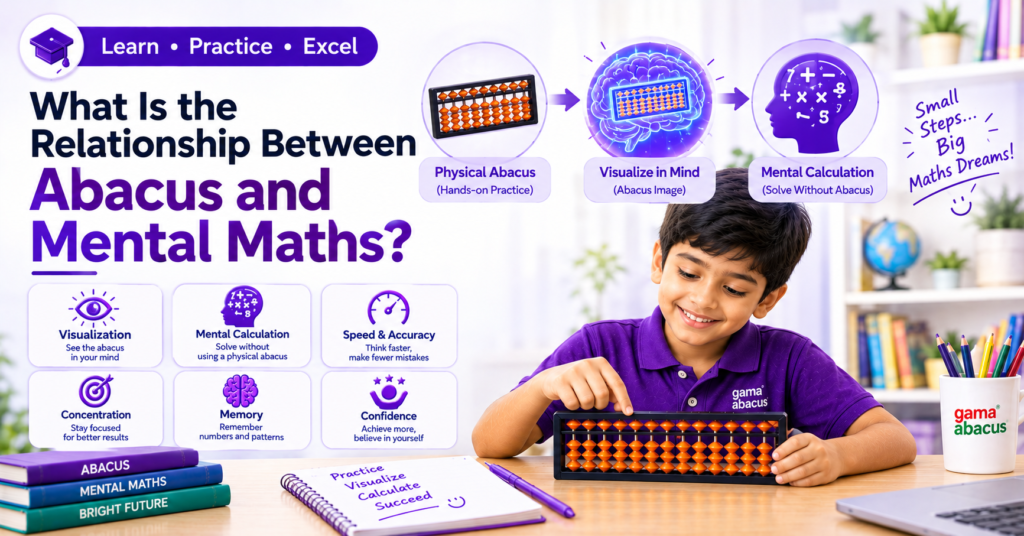
What Is the Relationship Between Abacus and Mental Maths?
Mental calculation is an important part of a child’s mathematical development. Many parents notice that their children can solve problems when they have paper in front of them but become hesitant when asked to calculate mentally. This is where the What Is the Relationship Between Abacus and Mental Maths? becomes interesting. Abacus learning gives children […]
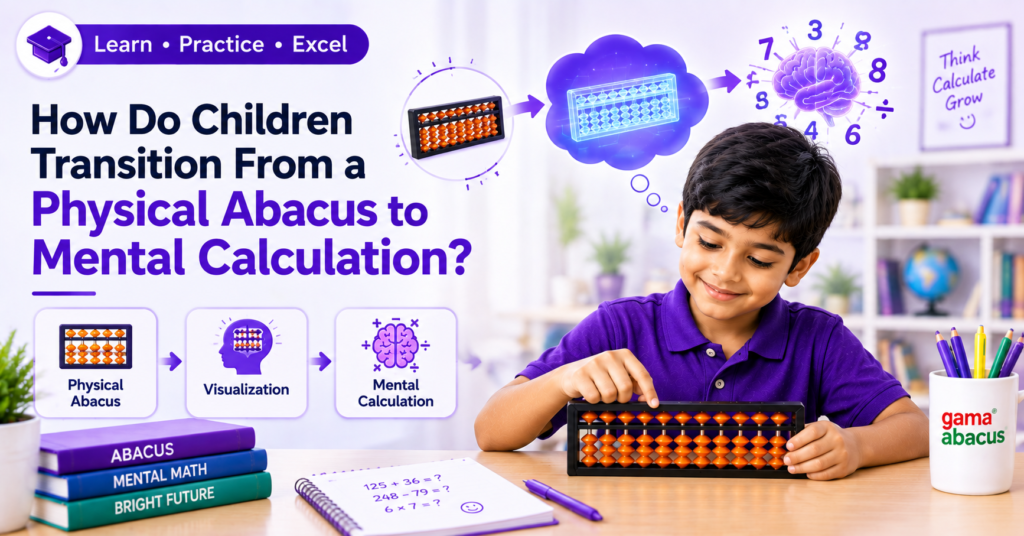
How Do Children Transition From a Physical Abacus to Mental Calculation?
Learning mathematics often begins with something children can see and touch. For many learners, the abacus provides that bridge. But how does a child move from moving beads with their fingers to calculating numbers mentally? The Physical Abacus to Mental Calculation journey is a gradual learning process in which children first understand quantities, practise movements, […]
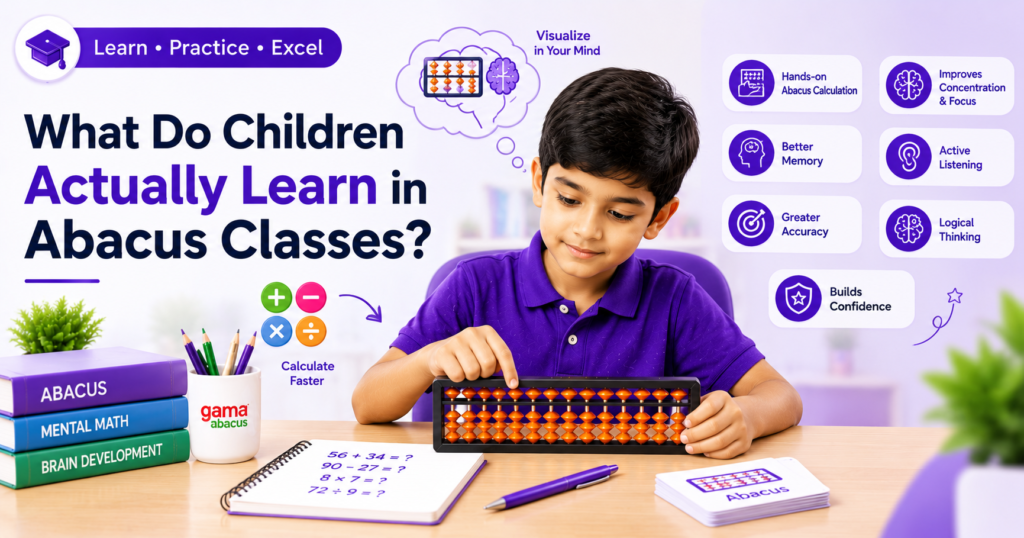
What Do Children Actually Learn in Abacus Classes?
Parents often wonder, what do children actually learn in abacus classes beyond simply moving beads and solving numbers? Abacus education is not only about performing calculations quickly. With regular practice, children learn how numbers work, how to break down calculations into smaller steps, and how to approach mathematical problems with greater confidence. The learning process […]
Don’t Just Spend Time at Home – Become an Abacus Teacher and Build Your Future
There are times in life when we have more time at home than we expected. For some, it may be after completing studies, while taking a career break, or while managing responsibilities at home. Instead of allowing that time to simply pass, learning a useful skill can open the door to a new sense of […]
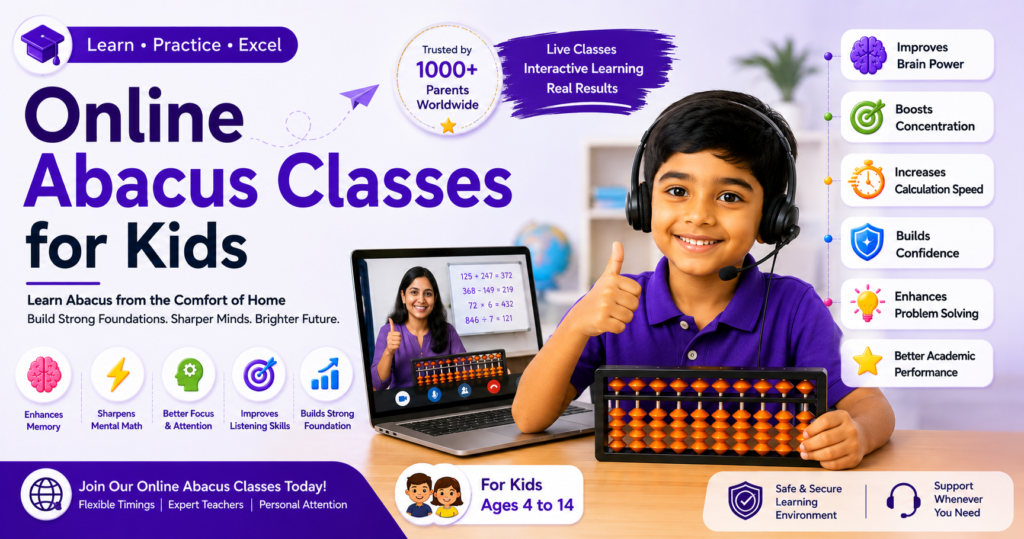
Online Abacus Classes for Kids: Learn Abacus from the Comfort of Home
Learning mathematics does not always have to happen inside a traditional classroom. With the growth of digital education, children can now develop number skills from their own homes with the right guidance and regular practice. Online Abacus Classes for Kids provide a structured way for children to learn abacus techniques while staying in a familiar […]
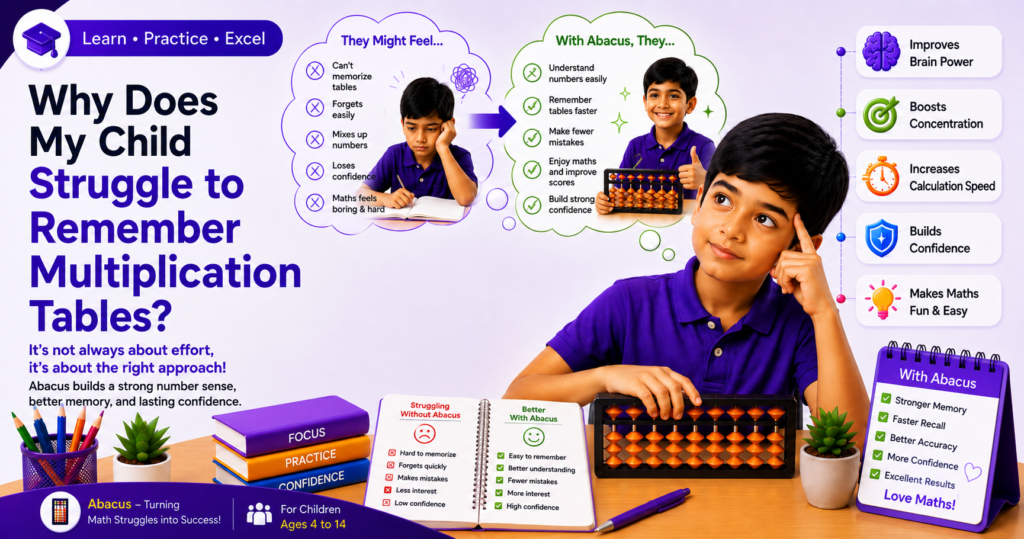
Why Does My Child Struggle to Remember Multiplication Tables?
If your child can solve addition and subtraction confidently but becomes stuck when multiplication tables come up, you may be asking, Why Does My Child Struggle to Remember Multiplication Tables? Many parents face this situation with their children. A child may practise a table several times and still forget it the next day. That does […]
Why Does My Child Forget Basic Maths Facts?
If your child can understand a maths lesson today but struggles to remember the same addition, subtraction, multiplication, or division facts a few days later, you may be wondering, Why Does My Child Forget Basic Maths Facts? This is a common concern among parents, and it does not necessarily mean that a child has poor […]