Is Abacus Better Than Traditional Math Learning?
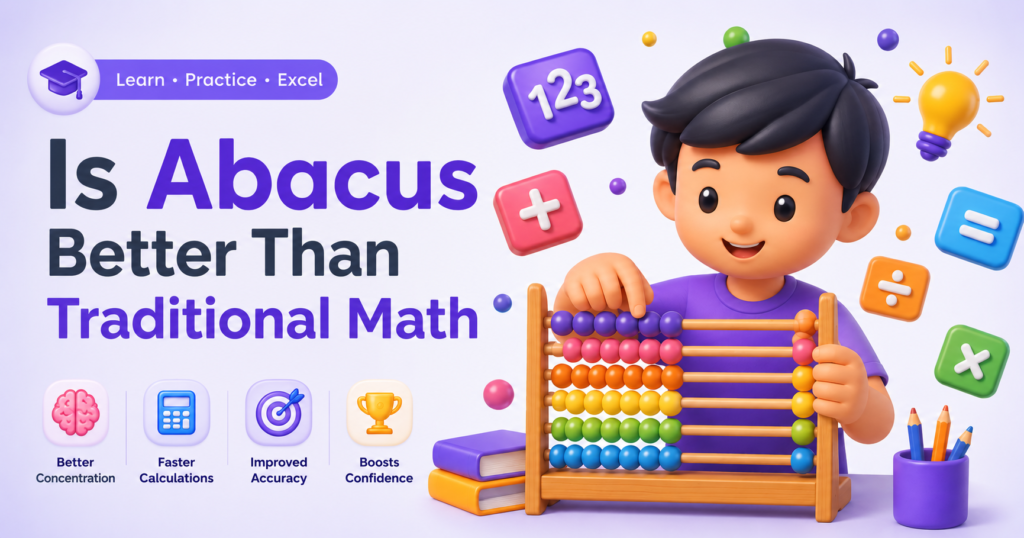
Mathematics plays a crucial role in a child’s education and overall development. It helps children build logical thinking, analytical abilities, and problem-solving skills that are valuable throughout life. While traditional math learning has been the standard approach in schools for many years, parents today are increasingly exploring additional learning methods that can help their children excel. This has led many families to ask an important question: Is Abacus Better Than Traditional Math Learning?
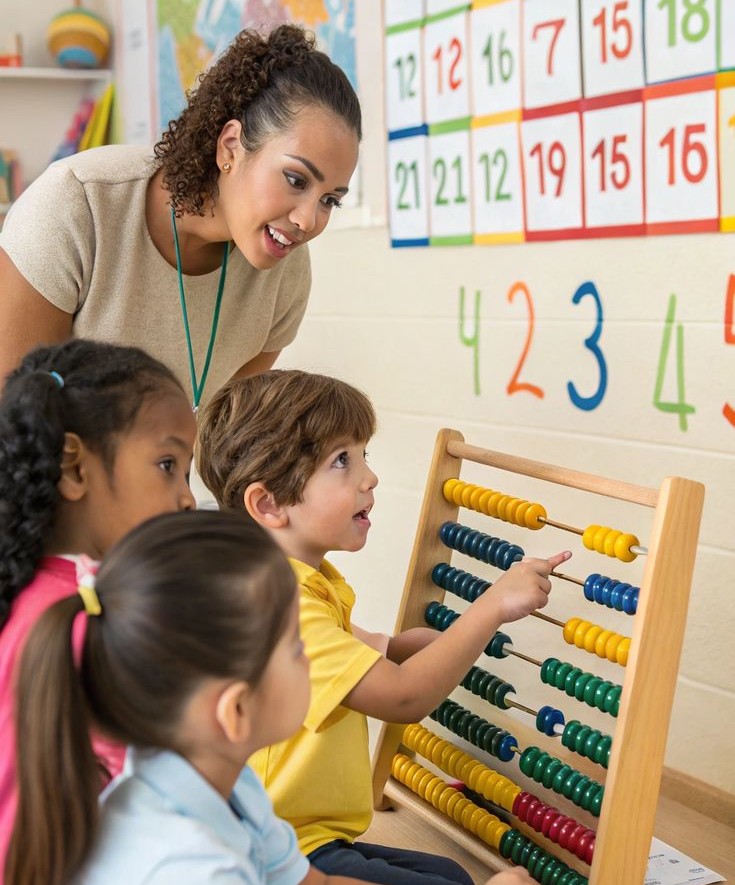
Parents searching for the best abacus classes in india often compare different learning methods before deciding which program is most suitable for their child. While traditional mathematics provides essential academic knowledge, abacus training offers a unique approach that focuses on improving concentration, memory, visualization, and mental calculation skills. Understanding the differences between these methods can help parents make informed decisions about their child’s learning journey.
Is Abacus Better Than Traditional Math Learning? A Detailed Comparison
To answer this question, it is important to understand that traditional mathematics and abacus training serve different purposes. Traditional math focuses on teaching concepts, formulas, equations, and problem-solving techniques required by school curricula. Abacus training, on the other hand, focuses on strengthening the brain’s ability to process numbers quickly and accurately through visualization and mental arithmetic.
Rather than replacing traditional mathematics, abacus training complements it by developing essential cognitive skills. This combination often helps children become more confident learners and stronger problem solvers.
Understanding Traditional Math Learning
Traditional math learning is the foundation of school education. Students learn topics such as addition, subtraction, multiplication, division, fractions, algebra, geometry, and statistics through textbooks, classroom instruction, and practice exercises.
This method provides children with a strong understanding of mathematical concepts and prepares them for examinations and higher education. Traditional mathematics teaches students how numbers work, how formulas are applied, and how problems can be solved systematically.
However, some children struggle with traditional math because it often relies on memorization and repetitive practice. When children find mathematics difficult, they may lose confidence and develop a fear of the subject.
What Is Abacus Learning?
Abacus learning uses a traditional counting tool called an abacus to teach arithmetic calculations. Students initially perform calculations using the physical abacus and later learn to visualize it mentally.
As children advance, they begin imagining the abacus in their minds and moving the beads mentally to solve problems. This process strengthens concentration, memory, observation, and visualization skills while improving calculation speed and accuracy.
Unlike traditional mathematics, abacus learning focuses heavily on mental processing and cognitive development.
How Abacus Training Differs from Traditional Math Education
One major difference between the two methods is how children interact with numbers.
In traditional mathematics, students usually write calculations on paper and apply formulas to solve problems. Learning is often based on understanding concepts and following specific procedures.
Abacus training takes a more visual and interactive approach. Children learn to picture numbers and bead movements mentally. This active involvement engages multiple areas of the brain simultaneously and makes learning more enjoyable.
Because of this unique process, many parents feel that abacus training offers benefits beyond ordinary classroom learning.
Is Abacus Better Than Traditional Math Learning? For Brain Development
When discussing cognitive growth, many parents naturally ask, Is Abacus Better Than Traditional Math Learning? Educational studies and observations suggest that abacus training stimulates both hemispheres of the brain.
The left hemisphere is associated with logic, reasoning, and numerical analysis, while the right hemisphere is linked to creativity, imagination, and visualization. Traditional mathematics primarily strengthens logical thinking. Abacus training strengthens logical thinking while also encouraging visualization and mental imagery.
This balanced brain stimulation can contribute to stronger concentration, faster information processing, and better memory retention.
Benefits of Abacus Over Traditional Math Learning
Improved Concentration
Concentration is one of the most important skills children need for academic success. Abacus exercises require students to focus carefully on numbers and calculations. Through regular practice, children learn to maintain attention for longer periods.
Many parents notice improvements in their child’s ability to focus not only during abacus sessions but also during schoolwork and other activities.
Better Memory
Memory plays an essential role in learning. Abacus students continuously visualize number positions and bead movements, which strengthens memory retention.
This improved memory often benefits children in subjects beyond mathematics, including science, languages, and general studies.
Faster Mental Calculations
One of the most recognized advantages of abacus learning is mental arithmetic. Children learn to perform calculations rapidly without depending on calculators or written methods.
This skill builds confidence and makes mathematics less intimidating.
Enhanced Visualization Skills
Visualization is at the heart of abacus training. Children learn to create mental images and manipulate them while solving problems.
Strong visualization abilities can support creativity, reading comprehension, and critical thinking.
Greater Confidence
Every achievement contributes to a child’s confidence. As students master mental calculations and progress through different levels of training, they develop a stronger belief in their abilities.
This confidence often extends to classroom participation, examinations, and extracurricular activities.
Is Abacus Better Than Traditional Math Learning? For Academic Performance
Academic success depends on more than simply understanding formulas. Students must also be able to concentrate, remember information, and solve problems efficiently.
Many children who undergo abacus training become more comfortable with numbers and develop a positive attitude toward mathematics. This confidence can lead to improved classroom performance and greater participation in learning activities.
While traditional mathematics provides the knowledge required for school examinations, abacus training strengthens the mental skills that help children apply that knowledge effectively.
Can Abacus and Traditional Math Work Together?
Absolutely.
In fact, the most effective educational approach often combines both methods. Traditional mathematics provides the theoretical foundation children need for academic success. Abacus training enhances the cognitive abilities that support learning.
Children who participate in abacus programs frequently find it easier to understand mathematical concepts because they have already developed strong numerical confidence and mental processing skills.
Rather than competing with traditional mathematics, abacus works alongside it to createa more complete learning experience.
This is why many educators believe that Is Abacus Better Than Traditional Math Learning? is not about choosing one method over the other. Instead, it is about combining the strengths of both approaches to create a more effective and enjoyable learning experience for children.
Is Abacus Better Than Traditional Math Learning? For Young Children
Young children learn best through engaging and interactive experiences. This is one reason why many educators recommend introducing abacus training during the early years.
At a young age, the brain is highly adaptable and capable of forming strong neural connections. Abacus training takes advantage of this stage by developing concentration, visualization, memory, and mental agility.
For many families, the answer to Is Abacus Better Than Traditional Math Learning? depends on age. Younger children often benefit greatly from the visual and hands-on nature of abacus education.
Common Myths About Abacus Learning
There are several misconceptions surrounding abacus education.
One common belief is that abacus is only useful for arithmetic calculations. In reality, abacus training supports cognitive development, concentration, memory, and logical thinking.
Another misconception is that calculators have made abacus obsolete. While calculators provide instant answers, they do not develop the mental abilities that children gain through abacus practice.
Some parents also believe that abacus is only suitable for academically gifted children. However, children of different learning abilities can benefit from structured abacus training.
Why Parents Are Choosing Abacus Training Today
Today’s parents are increasingly looking for educational programs that support overall development rather than focusing only on academic scores.
As families continue asking, Is Abacus Better Than Traditional Math Learning?, many discover that abacus training offers a wide range of benefits beyond mathematics. It encourages discipline, patience, focus, confidence, and independent thinking.
These qualities are valuable not only in school but also in everyday life and future careers.
How Abacus Supports Lifelong Learning
Learning is a lifelong process, and the skills developed during childhood often influence future success. Abacus training teaches children how to think critically, analyze situations, and approach challenges confidently.
These abilities continue to benefit children throughout their academic journey and everyday life. The habits of concentration, persistence, and logical reasoning developed through abacus practice can provide long-term advantages.
Why Gama Abacus Is the Right Choice
Choosing the right training program is just as important as choosing the right learning method. Recognized among the best abacus classes in india, Gama Abacus provides structured programs designed to enhance both mathematical and cognitive development.
For parents who frequently ask, Is Abacus Better Than Traditional Math Learning?, the answer often lies in the additional cognitive benefits that abacus training provides. Structured programs help children strengthen concentration, memory, visualization, and mental calculation skills while supporting their academic growth.
Through engaging lessons, experienced instructors, and systematic training, children develop concentration, memory, visualization, and mental arithmetic skills. The supportive learning environment encourages students to build confidence while enjoying the learning process.
Conclusion
So, Is Abacus Better Than Traditional Math Learning? The answer is not about replacing one method with another. Traditional mathematics remains essential for understanding concepts, solving curriculum-based problems, and succeeding in school. However, abacus training offers additional benefits that traditional learning alone may not provide.
When parents ask, Is Abacus Better Than Traditional Math Learning?, they are often looking for a way to help their children become more confident, focused, and capable learners. Abacus training supports these goals by improving memory, concentration, visualization, and mental calculation abilities.
The most effective approach is to combine both methods. Traditional mathematics builds knowledge, while abacus training strengthens the cognitive skills needed to use that knowledge effectively. Together, they create a strong foundation for academic achievement and lifelong success.