
A Beginner’s Guide to Abacus Classes for Children
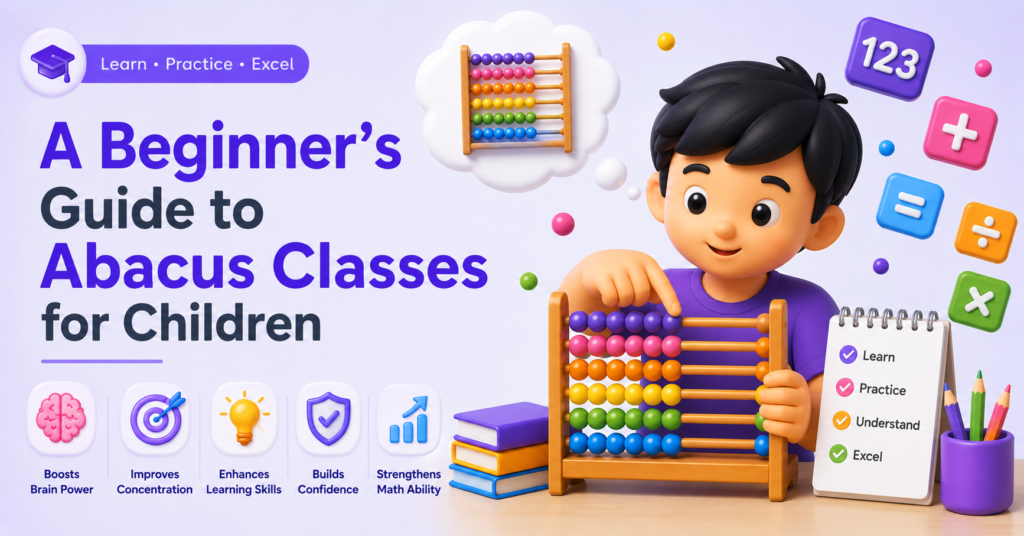
If you’re a parent looking for ways to boost your child’s learning abilities, A Beginner’s Guide to Abacus Classes for Children is the perfect place to start. In today’s competitive world, building strong mental skills early can give children a significant advantage. Abacus training is not just about numbers it enhances concentration, memory, and confidence in young learners. This guide will help you understand how abacus training works and why it’s becoming increasingly popular among parents.
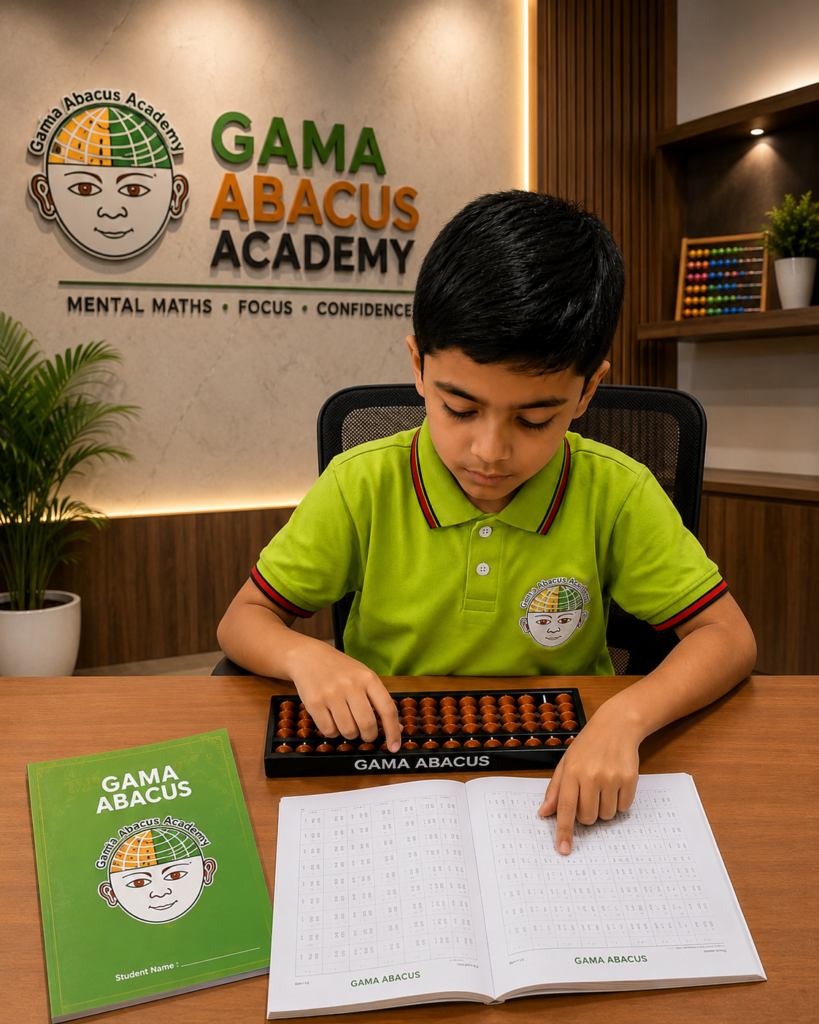
What Is an Abacus and How Does It Work?
A Beginner’s Guide to Abacus Classes for Children begins with understanding the tool itself. The abacus is an ancient calculating device that uses beads to perform arithmetic operations. Children learn to visualize the abacus in their minds, enabling them to solve complex problems quickly without relying on calculators.
This process strengthens neural connections and encourages faster thinking. Over time, children shift from physical beads to mental calculations, which is where the real magic happens.
Benefits of Learning Abacus for Kids
Improves Mental Calculation Skills
Through consistent practice, children develop the ability to perform calculations mentally with speed and accuracy. This makes them excel not only in math but also in other analytical subjects.
Enhances Concentration and Focus
A Beginner’s Guide to Abacus Classes for Children highlights how abacus training requires intense focus, helping children stay attentive for longer periods in school and daily activities.
Boosts Confidence and Academic Performance
Children who master mental arithmetic often feel more confident in classroom settings. Their improved performance encourages a positive attitude toward learning.
Why Parents Are Choosing Abacus Training
Today, many parents are enrolling their children in structured programs like abacus classes for kids to give them a head start. These programs are designed to be interactive and fun, ensuring children enjoy learning while developing essential skills.
Another reason is the growing demand for mental math classes, which focus on improving speed and accuracy in calculations without dependency on devices.
How Abacus Supports Brain Development
One of the key aspects discussed in A Beginner’s Guide to Abacus Classes for Children is its impact on cognitive growth. Abacus training activates both the left and right hemispheres of the brain.
- Left brain: Logical thinking and calculation
- Right brain: Visualization and creativity
This balanced stimulation promotes overall brain development for children, making them sharper and more adaptable learners.
What Children Learn in Abacus Classes
Basic Arithmetic Skills
Children begin with simple addition and subtraction before progressing to multiplication and division.
Visualization Techniques
A Beginner’s Guide to Abacus Classes for Children* explains how kids eventually learn to imagine the abacus in their minds, enabling faster calculations.
Listening and Observation Skills
Instructors often use oral exercises, helping children improve their listening abilities and quick response time.
When Should Your Child Start Learning Abacus?
Experts suggest that children between the ages of 5 and 14 benefit the most from abacus training. At this stage, their brains are highly adaptable and capable of absorbing new skills quickly.
A Beginner’s Guide to Abacus Classes for Children emphasizes starting early to maximize long-term benefits. However, older children can also gain significant improvements with consistent practice.
Choosing the Right Abacus Program
With many options available, selecting the right institute is crucial. Parents often look for the best abacus classes in India that offer:
- Certified trainers
- Structured curriculum
- Interactive teaching methods
- Regular assessments
A good program ensures children stay engaged and progress steadily.
Tips for Parents to Support Their Child
A Beginner’s Guide to Abacus Classes for Children also focuses on the role of parents in the learning journey.
- Encourage daily practice
- Appreciate small achievements
- Avoid pressuring the child
- Maintain a positive learning environment
Your support can make a huge difference in how effectively your child learns.
Common Myths About Abacus Learning
Myth 1: It’s Only About Math
In reality, abacus training improves memory, focus, and creativity.
Myth 2: It’s Too Difficult for Young Children
Children adapt quickly when learning is made fun and interactive.
Myth 3: Results Take Too Long
With consistent effort, noticeable improvements can be seen within months.
A Beginner’s Guide to Abacus Classes for Children clears these misconceptions and helps parents make informed decisions.
How Abacus Learning Builds Life Skills
Beyond academics, abacus training helps children develop discipline, patience, and problem-solving abilities. These skills are essential for long-term success in any field.
A Beginner’s Guide to Abacus Classes for Children shows that this method is not just about numbers—it’s about shaping a child’s overall personality.
FAQ Section
1. What is the right age to start abacus classes?
Children can start as early as 5 years old, as their brains are highly receptive at this stage.
2. How long does it take to see results?
Most children show improvement within 3–6 months of regular practice.
3. Is abacus learning useful for school exams?
Yes, it improves speed and accuracy, helping children perform better in exams.
4. Can abacus replace traditional math learning?
No, it complements school math by enhancing mental calculation skills.
5. How often should children practice?
Daily practice of 15–20 minutes is usually sufficient for steady progress.
Conclusion
In conclusion, A Beginner’s Guide to Abacus Classes for Children provides valuable insights into how this powerful learning method can transform a child’s cognitive abilities. From improving concentration to boosting confidence, abacus training offers lifelong benefits. If you’re looking to give your child a strong foundation for academic and personal success, enrolling them in an abacus program is a smart choice.