
How Abacus Helps Children Stay Focused During Exams
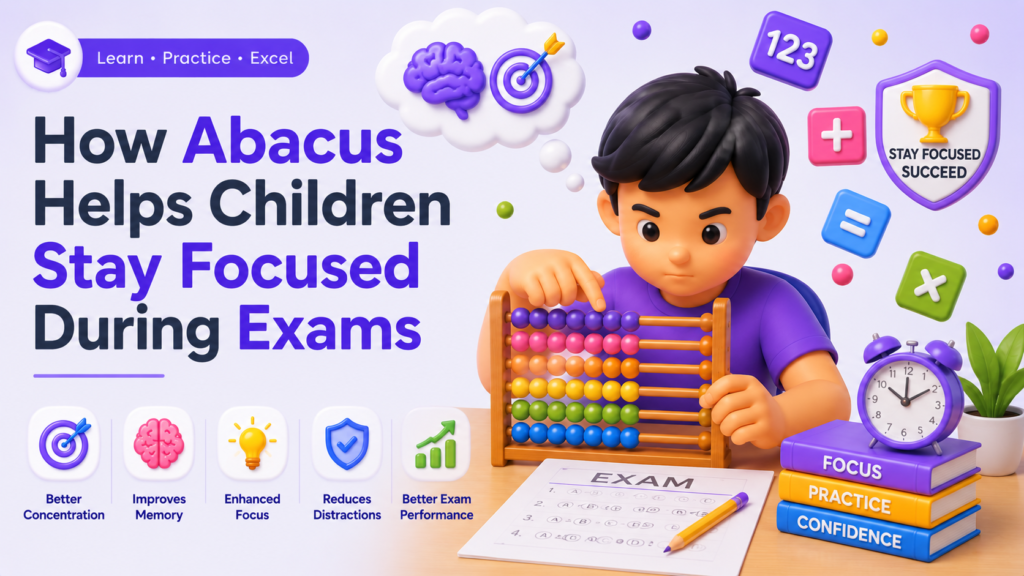
ExaminExaminations are an important part of every child’s academic journey. They not only assess what students have learned but also test their ability to stay calm, focused, and confident under pressure. Many children prepare well for exams, yet they struggle to maintain concentration while answering questions. They may become distracted, forget important concepts, or make simple mistakes because of stress and a lack of focus. This is why understanding How Abacus Helps Children Stay Focused During Exams is valuable for every parent who wants to support their child’s overall learning and academic growth.
Abacus training is much more than a method for improving calculation speed. It is a structured brain development program that enhances concentration, memory, observation, visualization, and logical thinking. Through regular practice, children develop the mental discipline required to remain attentive during lessons and examinations. These skills benefit students throughout their academic life and even beyond the classroom. Parents searching for the best abacus classes in india often choose programs that focus on overall cognitive development because they understand that strong thinking skills are the foundation of lifelong learning.
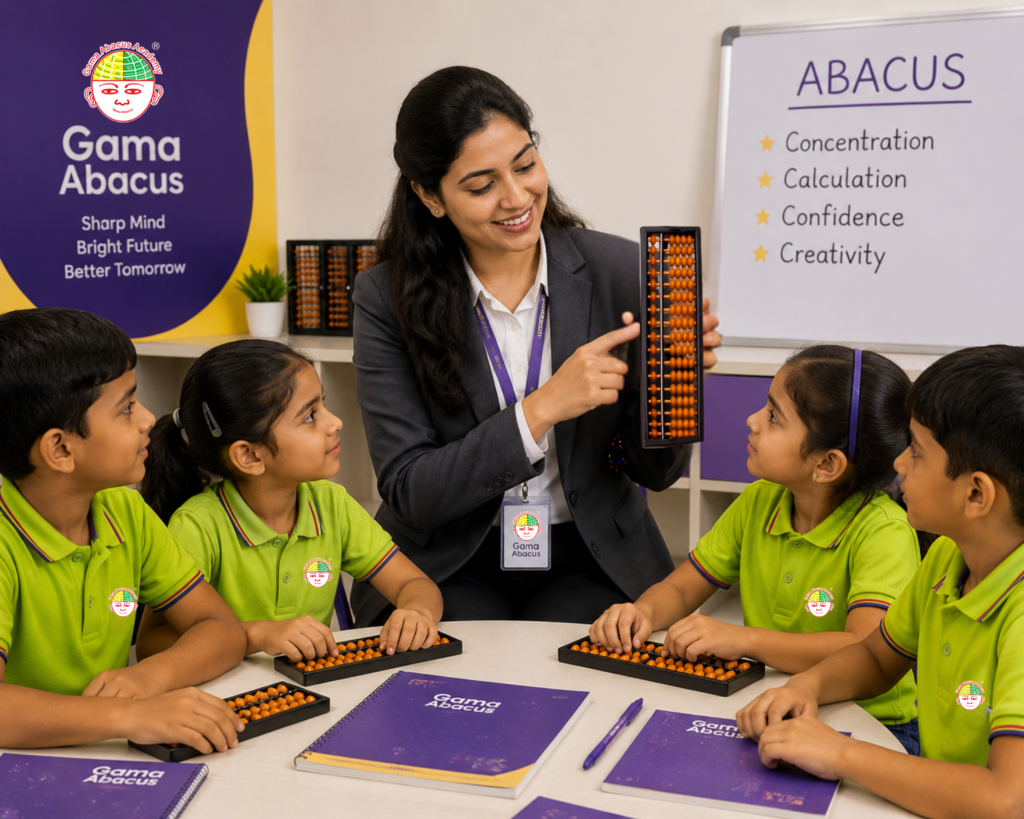
Why Focus Matters During Exams
Concentration is one of the most important factors that influence exam performance. A child who remains focused throughout an examination is more likely to understand questions correctly, manage time effectively, and answer with confidence. On the other hand, losing concentration for even a few minutes can lead to unnecessary mistakes.
Children who struggle with focus often experience challenges such as:
- Missing important instructions in the question paper
- Forgetting answers they have already studied
- Making calculation errors due to carelessness
- Spending too much time on a single question
- Feeling anxious before completing the paper
Developing strong concentration does not happen overnight. It requires consistent mental exercise, and this is one of the key strengths of abacus training.
How Abacus Helps Children Stay Focused During Exams by Improving Concentration
One of the biggest reasons parents enroll their children in abacus programs is the improvement they notice in concentration. Every abacus session demands complete mental attention. Children must carefully observe numbers, listen to instructions, imagine the movement of beads, and perform calculations without losing their focus.
Unlike ordinary classroom activities, abacus engages multiple parts of the brain at the same time. Students cannot simply memorize answers. Instead, they actively process information, visualize the abacus, and think through each calculation. This repeated mental exercise trains the brain to stay attentive for longer periods.
As children continue practicing, their attention span gradually increases. They become more capable of concentrating during school lessons, homework sessions, and examinations without becoming distracted easily. This explains How Abacus Helps Children Stay Focused During Exams by strengthening a child’s ability to maintain attention under pressure.
Strengthening Working Memory Through Abacus
Memory plays a significant role during examinations. Students must remember formulas, concepts, vocabulary, grammar rules, and scientific facts while answering questions within a limited time.
Abacus training strengthens working memory because children perform calculations mentally rather than relying on written methods. They learn to remember number sequences, visualize bead positions, and complete calculations step by step in their minds.
Over time, this repeated practice improves memory retention. Children become more confident in recalling information during exams because their brains are trained to store and retrieve information efficiently.
Better memory also reduces hesitation while answering questions, allowing students to complete papers with greater accuracy.
How Abacus Helps Children Stay Focused During Exams by Developing Visualization Skills
Visualization is one of the unique features that makes abacus training different from traditional mathematics learning.
As students progress through different levels, they gradually stop depending on the physical abacus. Instead, they imagine the abacus in their minds and mentally move the beads while solving problems.
This mental visualization activates several cognitive processes simultaneously. Children strengthen their ability to picture information clearly, maintain attention, and think logically without becoming distracted.
Visualization also helps students remain mentally engaged throughout the examination. Instead of allowing their minds to wander, they learn to focus entirely on the task before them.
This is one of the reasons How Abacus Helps Children Stay Focused During Exams goes far beyond improving mathematical ability.
Builds Mental Discipline and Patience
Examinations require patience as much as knowledge. Students who rush through their papers often overlook important details or make avoidable mistakes.
Abacus encourages children to develop disciplined thinking by teaching them to follow a structured process while solving problems.
Every lesson reinforces habits such as:
Following Instructions Carefully
Children learn to pay close attention to every number and every instruction given by the trainer.
Completing Tasks Systematically
Rather than guessing answers, students solve problems using a logical sequence of steps.
Practicing Consistently
Success in abacus comes through regular practice. This habit naturally extends to school studies and exam preparation.
These qualities help children remain calm and organized when they sit for examinations.
Improves Mental Calculation Speed
Time management is essential during exams, especially in mathematics.
Many students understand the concepts but struggle because they spend too much time solving basic calculations.
Regular abacus practice develops mental arithmetic skills that allow children to calculate quickly without sacrificing accuracy.
The benefits include:
- Completing calculations faster
- Spending more time on difficult questions
- Reviewing answers before submission
- Reducing unnecessary pressure during exams
When children are not worried about simple calculations, they can focus their energy on understanding questions and presenting accurate answers. This is another example of How Abacus Helps Children Stay Focused During Exams by improving both speed and concentration.
Reduces Exam Anxiety
Exam anxiety affects children of all ages.
Even well-prepared students sometimes panic because they fear making mistakes or running out of time.
One of the lesser-known advantages of abacus training is the confidence it builds through continuous achievement.
Children solve increasingly challenging problems as they progress through each level. Every success strengthens their belief in their own abilities.
Confident students approach examinations with a positive mindset. Instead of worrying about failure,they focus on solving one question at a time.
This emotional stability plays a major role in improving concentration during exams.
Parents often notice that children who practice abacus regularly become calmer during assessments because they have learned to trust their thinking abilities. This confidence clearly demonstrates How Abacus Helps Children Stay Focused During Exams by reducing fear and encouraging a positive attitude
Improves Observation Skills
Observation is an important skill that is often overlooked during exam preparation. Many students lose marks not because they do not know the answer, but because they misread a question or miss a key instruction. A single overlooked word can completely change the meaning of a question and lead to an incorrect answer.
Abacus training naturally sharpens observation skills. During every session, children must pay close attention to numbers, bead movements, and instructions from their trainer. Missing even one number can change the final answer, so students quickly learn the importance of staying alert.
As observation skills improve, children begin to:
- Read questions more carefully.
- Notice important keywords and instructions.
- Avoid careless mistakes.
- Improve their overall accuracy in exams.
These improvements are valuable across every subject, not just mathematics. Whether solving science problems, reading comprehension passages, or answering social science questions, strong observation skills help children perform with greater confidence. This is another reason How Abacus Helps Children Stay Focused During Exams has benefits beyond arithmetic.
How Abacus Helps Children Stay Focused During Exams by Enhancing Listening Skills
Listening is another essential skill that supports academic success. In classrooms, children are expected to listen carefully to explanations, understand new concepts, and remember important instructions. Students with good listening skills often find it easier to understand lessons and prepare for examinations.
Abacus classes regularly include listening exercises. Trainers announce numbers aloud, and students must listen carefully before performing mental calculations. This continuous practice strengthens auditory processing and encourages children to remain attentive throughout the session.
Over time, children become better listeners both inside and outside the classroom. They can follow lessons more effectively, understand teacher instructions without repeated explanations, and retain information more efficiently.
This is another reason How Abacus Helps Children Stay Focused During Exams. Better listening leads to better understanding, which ultimately improves exam performance.
Encourages Consistent Learning Habits
Academic success is rarely achieved through last-minute studying. Children who perform consistently well usually develop good learning habits over time. Regular practice, discipline, and a structured routine make a significant difference in long-term academic performance.
Abacus training encourages these habits naturally.
Students attend classes regularly, practice at home, and gradually progress through different levels. Every stage requires commitment and patience. This routine teaches children that improvement comes from consistency rather than shortcuts.
As a result, they begin applying the same disciplined approach to school studies. Homework is completed on time, revision becomes more organised, and exam preparation becomes less stressful.
These positive habits continue benefiting children throughout their educational journey and clearly show How Abacus Helps Children Stay Focused During Exams.
Supports Overall Brain Development
One of the greatest advantages of abacus training is that it develops the brain as a whole rather than focusing on a single academic subject.
When children solve mental calculations using an imaginary abacus, multiple cognitive functions work together at the same time. They use concentration, memory, visualization, observation, logical reasoning, and hand-eye coordination simultaneously.
This integrated brain activity strengthens neural connections and improves overall cognitive performance.
Some of the long-term benefits include:
Better Concentration
Children become capable of maintaining attention for longer periods without becoming distracted.
Faster Information Processing
They learn to understand and respond to questions more quickly.
Improved Logical Thinking
Problem-solving becomes more structured and systematic.
Greater Confidence
Children develop confidence because they experience regular success through practice.
Better Academic Performance
Improved cognitive abilities support learning across mathematics, science, languages, and other subjects.
These benefits explain why abacus is recognised as an effective brain development program rather than simply a method for learning arithmetic.
Practical Tips for Parents to Improve Exam Focus
While abacus provides an excellent foundation for concentration, parents can further support their children’s learning by encouraging healthy daily habits.
Create a Consistent Study Schedule
A fixed study routine helps children develop discipline and reduces last-minute exam stress.
Encourage Daily Abacus Practice
Even 15–20 minutes of regular practice helps strengthen concentration and memory over time.
Ensure Proper Sleep
Adequate sleep allows the brain to process information effectively and improves attention during exams.
Provide Balanced Nutrition
Healthy meals rich in fruits, vegetables, whole grains, and protein support brain function and sustained concentration.
Reduce Digital Distractions
Limiting unnecessary screen time before study sessions helps children remain mentally focused.
Appreciate Effort Rather Than Only Results
Positive encouragement motivates children to continue learning without developing unnecessary exam anxiety.
Combining these healthy habits with structured brain training helps children remain attentive, motivated, and confident during examinations. These simple practices reinforce How Abacus Helps Children Stay Focused During Exams in everyday life.
Why Parents Trust Abacus for Long-Term Success
Many parents initially join an abacus program because they want their children to improve in mathematics. However, they soon realise that the benefits extend far beyond faster calculations.
Children who practise abacus regularly often become:
- Better learners
- More confident speakers
- Faster thinkers
- More organised students
- Stronger problem solvers
- More independent during studies
These improvements continue supporting children throughout school and beyond. The lasting impact on confidence, discipline, and learning ability is another reason How Abacus Helps Children Stay Focused During Exams remains an important topic for parents seeking effective brain development programs.
How Abacus Helps Children Stay Focused During Exams for Future Academic Success
The skills developed through abacus continue benefiting children as academic challenges become more advanced.
In higher classes, students face longer examinations, more complex concepts, and greater competition. Concentration, confidence, logical thinking, and effective time management become increasingly important.
Children who have developed these abilities through consistent abacus practice are often better prepared to handle these challenges.
Instead of feeling overwhelmed, they approach difficult tasks with patience and confidence. They understand the value of regular practice and disciplined learning, making them more adaptable learners.
This demonstrates that How Abacus Helps Children Stay Focused During Exams is not only relevant for school examinations but also for building lifelong learning habits.
Conclusion
Understanding How Abacus Helps Children Stay Focused During Exams allows parents to appreciate the broader benefits of structured brain development training. Abacus strengthens concentration, improves memory, enhances observation, develops visualization skills, and builds the confidence children need to perform well under pressure.
More importantly, abacus nurtures qualities such as discipline, patience, consistency, and independent thinking that continue benefiting children throughout their educational journey. By helping young learners stay calm, attentive, and confident during examinations, abacus lays a strong foundation for future academic success and lifelong learning. The remarkable advantages discussed throughout this article clearly show How Abacus Helps Children Stay Focused During Exams and why it remains one of the most effective learning methods for children today..