
My Child Gets Nervous During Math Exams: How Abacus Can Help Build Confidence and Reduce Exam Anxiety
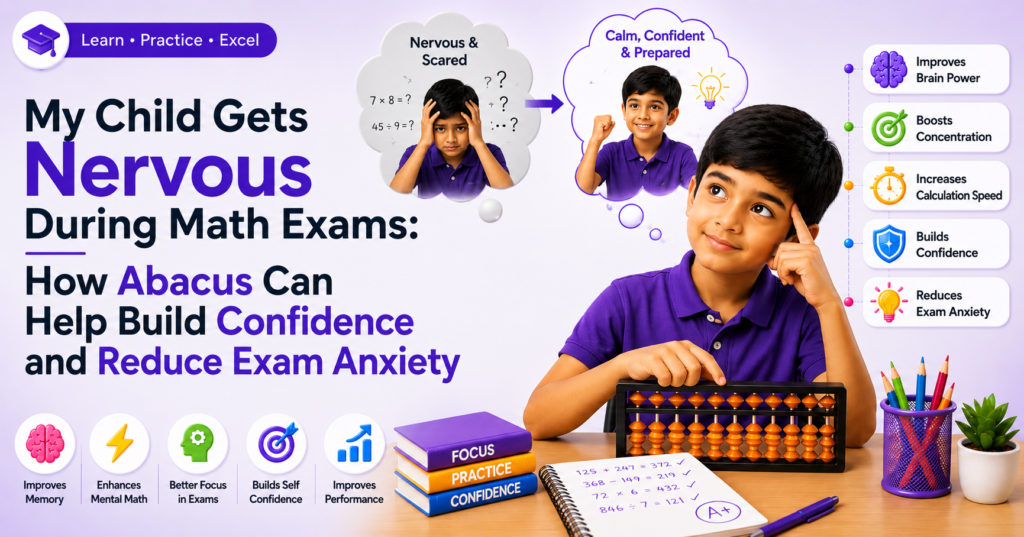
As a parent, it can be difficult to watch your child become anxious before every mathematics exam. You may notice them studying sincerely at home, answering questions correctly during practice, yet struggling to perform in the examination hall. If you’ve ever found yourself thinking, My Child Gets Nervous During Math Exams, you’re not alone. Thousands of parents face the same challenge, wondering why their child suddenly forgets simple calculations or freezes under pressure despite knowing the answers.
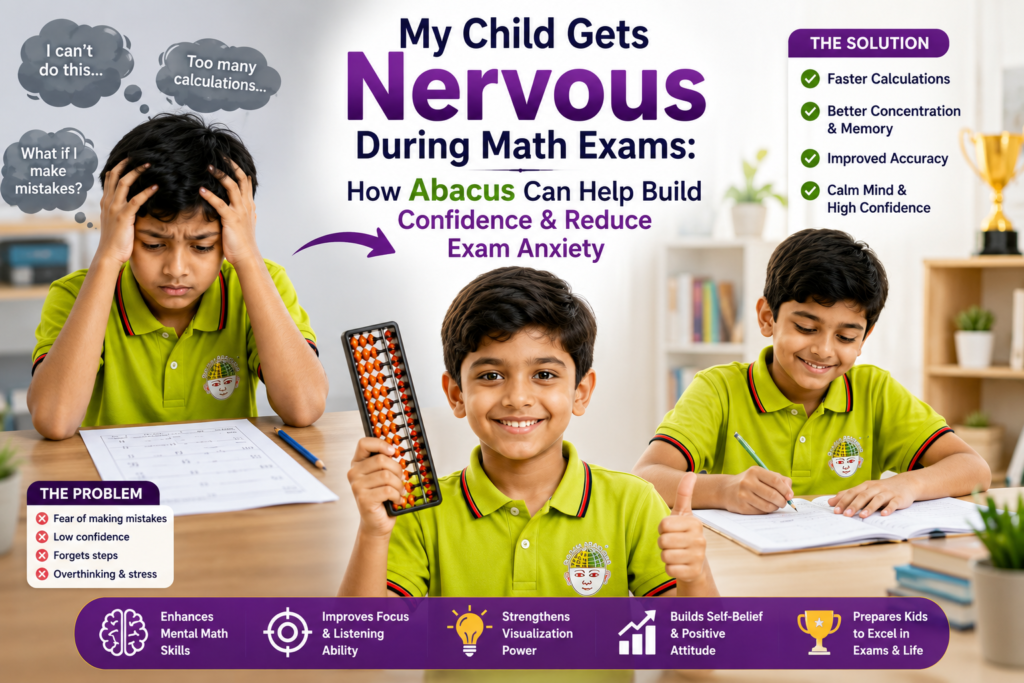
Math anxiety is more common than many people realize. It affects children of different ages and ability levels. In many cases, the problem isn’t that children don’t understand mathematics they simply lose confidence when faced with exam pressure. Their heart races, their mind goes blank, and even basic arithmetic suddenly feels difficult.
The encouraging news is that this fear can be overcome. Children don’t need endless worksheets or extra hours of memorization. Instead, they need a learning method that strengthens confidence, improves concentration, and helps them trust their own thinking. This is where abacus training has made a significant difference for many children around the world.
Rather than teaching children to memorize answers, abacus helps them understand numbers, visualize calculations, and solve problems mentally. As these skills improve, exam anxiety often begins to decrease naturally.
Many parents search online because My Child Gets Nervous During Math Exams is a common concern among school-going children.
Why Do Children Feel Nervous During Math Exams?
Every child reacts differently to examinations. Some become excited by the challenge, while others experience genuine fear. Mathematics, in particular, creates anxiety because every question appears to demand immediate accuracy.
Parents often assume their child is weak in mathematics, but that’s not always true. Many intelligent children experience exam stress because they lack confidence in their calculation abilities.
Several factors contribute to this nervousness:
- Fear of making mistakes
- Pressure to score high marks
- Slow calculation speed
- Difficulty remembering mathematical steps
- Previous disappointing exam experiences
- Comparing themselves with classmates
When these concerns build up over time, children begin associating mathematics with fear instead of learning. This emotional response can reduce their ability to think clearly during examinations.
Understanding why My Child Gets Nervous During Math Exams is the first step toward helping children build confidence.
My Child Gets Nervous During Math Exams Because Confidence Is Missing
Confidence plays a much bigger role in academic success than many parents realize.
Imagine two children with the same mathematical knowledge. One approaches the exam believing they can solve the questions, while the other constantly worries about making mistakes. Even though both have similar abilities, the confident child usually performs much better.
This happens because confidence allows the brain to stay calm.
Children who doubt themselves often second-guess every calculation. They erase correct answers, spend too much time checking simple sums, or panic when they encounter a slightly difficult question.
Abacus training helps build confidence through repeated success. Instead of memorizing formulas without understanding them, children gradually develop a clear understanding of numbers. As they experience small achievements during practice, their confidence grows naturally.
Over time, they begin trusting their own thinking rather than fearing every calculation.
How Exam Anxiety Affects Mathematical Performance
Exam anxiety doesn’t simply create nervous feelings. It directly affects how children process information.
When anxiety levels rise, the brain focuses more on fear than on solving problems.
As a result, children may:
- Forget basic multiplication tables they already know
- Misread simple questions
- Skip important calculation steps
- Lose track of time
- Make careless mistakes
- Give up on questions too quickly
Many parents mistakenly believe these mistakes happen because their child hasn’t studied enough.
In reality, anxiety often blocks children from using the knowledge they already possess.
Reducing fear can therefore improve performance without increasing study hours.
My Child Gets Nervous During Math Exams When Calculations Feel Slow
One of the biggest causes of exam panic is slow calculation speed.
Imagine a child spending two or three minutes solving a basic arithmetic question while watching the exam clock continue ticking. As time passes, stress increases, making calculations even slower.
This creates a cycle:
Slow calculation → Panic → More mistakes → Less confidence → Greater anxiety.
Breaking this cycle requires improving calculation efficiency rather than simply solving more worksheets.
Abacus training gradually teaches children to perform calculations mentally by visualizing numbers instead of depending entirely on fingers or written rough work.
As speed improves, children begin feeling more relaxed during examinations because they know they have enough time to complete the paper.
How Abacus Changes the Way Children Think
The abacus is much more than a counting tool.
It trains children to process numbers differently.
Instead of seeing mathematics as isolated formulas, children begin recognizing relationships between numbers.
For example, they learn to:
Understand Number Patterns
Children quickly identify how numbers connect instead of counting one by one.
Develop Mental Visualization
After regular practice with a physical abacus, children gradually picture the beads mentally while solving questions.
Improve Working Memory
Mental calculation strengthens the brain’s ability to hold and manipulate information at the same time.
Increase Concentration
Because every calculation requires focus, children naturally improve their attention span.
These skills don’t develop overnight, but they become stronger through consistent practice.
My Child Gets Nervous During Math Exams Can Improve with Better Concentration
Many children know the correct method but lose marks because they become distracted during examinations.
They may:
- Skip a line while calculating
- Copy numbers incorrectly
- Forget the operation required
- Rush through easy questions
Concentration is a skill that can be trained.
Abacus exercises require children to carefully observe, listen, imagine, and calculate simultaneously.
This combination strengthens sustained attention, helping children remain focused even during longer examinations.
As concentration improves, children become less likely to make careless mistakes caused by stress or distraction.
Signs That Your Child May Be Experiencing Math Anxiety
Sometimes children don’t openly admit they’re afraid of mathematics.
Instead, parents notice changes in behavior.
Common warning signs include:
- Complaining of stomach aches before exams
- Avoiding mathematics homework
- Becoming unusually quiet before tests
- Saying “I’m not good at math.”
- Crying after making smallmistakes
- Feeling frustrated during practice sessions
- Asking to skip math-related activities
Recognizing these signs early allows parents to respond with encouragement instead of criticism.
The goal isn’t to remove every challenge but to help children develop the confidence needed to face those challenges calmly.
My Child Gets Nervous During Math Exams but More Homework Isn’t Always the Answer
When children struggle with mathematics, many parents naturally think the solution is more practice papers or longer study hours. While practice is important, simply increasing the workload doesn’t always solve the real problem.
A child who feels anxious may already know the correct method but struggle to apply it under pressure. Adding more worksheets can sometimes increase frustration instead of building confidence.
The focus should be on improving understanding, calculation speed, and self-belief. When children begin experiencing success during their learning process, they approach exams with a much calmer mindset.
Abacus training supports this gradual improvement by helping children develop strong number sense rather than depending only on memorization.
Simple Ways Parents Can Reduce Math Exam Anxiety
Parents play an important role in shaping their child’s attitude toward mathematics. Small changes at home can make a big difference.
Encourage Short Daily Practice
Instead of asking children to study for several hours before an exam, encourage 15–20 minutes of focused daily practice. Consistency helps the brain retain information more effectively than last-minute revision.
Praise Effort, Not Just Results
Celebrate your child’s progress, even if it’s small. When children know their effort is appreciated, they become more willing to face difficult questions without fear.
Avoid Comparing Children
Every child develops mathematical skills at their own pace. Comparing siblings or classmates often reduces confidence rather than improving performance.
Create a Positive Learning Environment
Children learn better when they feel safe to make mistakes. Encourage them to ask questions, solve problems patiently, and view mistakes as opportunities to improve.
Build Healthy Exam Habits
A good night’s sleep, balanced nutrition, and arriving early for exams all contribute to better concentration and lower stress levels.
My Child Gets Nervous During Math Exams During Timed Tests Because Time Pressure Feels Overwhelming
One of the biggest challenges in school mathematics is managing time.
Children who calculate slowly often spend too much time on easy questions and begin rushing through the remaining sections. As the clock continues ticking, anxiety increases, leading to more mistakes.
Abacus training improves mental calculation speed through regular visualization exercises.
When children solve arithmetic more efficiently, they gain extra time to:
- Read questions carefully
- Check their answers
- Correct small mistakes
- Stay calm throughout the examination
Knowing they have enough time often reduces unnecessary panic before and during tests.
How Abacus Supports Long-Term Academic Growth
Many parents first enroll their children in abacus classes to improve mathematics. However, they are often surprised to notice improvements in other areas as well.
Regular practice develops several valuable learning skills, including:
- Better listening ability
- Stronger memory
- Improved focus
- Faster information processing
- Greater problem-solving confidence
These abilities support overall academic performance, making classroom learning easier across multiple subjects.
Rather than being a shortcut for mathematics, abacus helps children build lifelong learning habits.
My Child Gets Nervous During Math Exams Less When Success Becomes a Habit
Confidence doesn’t appear overnight.
It grows every time children successfully solve a challenging problem.
Each correct answer reinforces the belief that they are capable learners.
With regular practice, children begin noticing that calculations which once seemed difficult now feel much easier.
This positive experience changes the way they approach examinations.
Instead of thinking,
”I’m going to fail.”
they begin thinking,
“I’ve practiced this before. I can do it.”
This shift in mindset is one of the biggest reasons many children become calmer during mathematics exams.
Common Mistakes Parents Should Avoid
Parents naturally want the best for their children, but some well-intentioned habits may increase exam anxiety.
Focusing Only on Marks
Children should understand that learning is more important than perfection. Constantly discussing marks can increase pressure.
Correcting Every Mistake Immediately
Allow children time to think independently before providing answers. This builds confidence in problem-solving.
Using Negative Language
Statements such as “Math is difficult” or “You always make mistakes” can reduce motivation.
Instead, encourage positive thinking by reminding children that improvement comes with practice.
Ignoring Small Improvements
Recognizing gradual progress keeps children motivated and encourages continued learning.
My Child Gets Nervous During Math Exams Can Change with Consistent Practice
Like reading or riding a bicycle, confidence in mathematics develops through repetition.
Children who practice regularly become more familiar with numbers, making calculations feel automatic rather than stressful.
Over time, they stop depending on finger counting or guessing.
Instead, they approach each question calmly, knowing they have the skills needed to solve it.
Parents often notice that this confidence extends beyond examinations into everyday classroom participation and homework.
Choosing the Right Learning Program
Selecting the right learning environment can make a significant difference in your child’s progress.
Whether you’re considering abacus classes for kids, comparing mental math classes, or searching for the best abacus classes in India, choose a structured program that focuses on conceptual understanding, gradual skill development, and consistent practice. High-quality abacus learning also supports brain development for children, helping young learners improve concentration, confidence, and independent thinking.
Frequently Asked Questions
Can abacus completely remove math exam fear?
Abacus cannot eliminate all exam nerves, but it can significantly reduce anxiety by improving calculation speed, confidence, concentration, and number sense. As children become more comfortable with mathematics, they usually approach exams with greater self-belief.
How long does it take to notice improvement?
Every child learns differently. Some children become more confident within a few months of regular practice, while others may require more time. Consistency is more important than speed.
Is abacus suitable for children who already struggle with mathematics?
Yes. Abacus begins by strengthening fundamental number concepts before progressing to advanced mental calculation, making it suitable for children with varying ability levels.
Should parents continue helping with school mathematics?
Absolutely. Encouragement at home, combined with structured learning, creates the best environment for long-term success.
Conclusion
If you’ve ever wondered, My Child Gets Nervous During Math Exams , remember that nervousness doesn’t mean your child lacks ability. In many cases, children simply need stronger confidence, better concentration,and faster calculation skills to perform at their true potential. Abacus training supports these essential abilities by helping children understand numbers, visualize calculations, and approach mathematics with greater confidence. With patience, regular practice, and the right guidance, children can gradually replace fear with self-belief and face every mathematics exam with a calmer, more positive mindset.